🏠
Household
Organization, infrastructure, and self-sufficiency for the domestic sphere.
Gridfinity (42mm modular storage) · Parametric Connectors (PVC/bamboo shelters) · Faircap Water Filters (PCO 1881 thread)
42mm standard
Makers: customize any parameter and export your perfect STL. Creators: turn your OpenSCAD models into configurators anyone can use.
The world of Yantra4D is vast. How do you wish to interact with the new paradigm of manufacturing?
Explore objects that are not static, but exist as software-defined possibility spaces.
Understand the universal geometry that allows any part to fit with any other part, instantly.
Join the global library of remixable, open-source designs owned by everyone.
Open, parametric hardware you can resize, remix and manufacture — every cartridge free, forever. Open one in Studio and make it yours.
Showing images instead of live 3D — by your choice, your system settings, or because this browser has no WebGL.
 🔷 Hyperobject
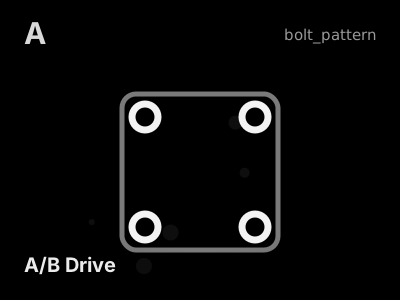
A printed A/B drive unit for a CoreXY gantry with two stacked belts (a 2.4-class flying gantry). It sits on the rear end of a gantry Y extrusion and reaches the rear gantry beam, on M5 T-nuts; a NEMA 17 hangs under its motor plate inboard of the extrusion. Its own belt wraps the GT2 20T pulley about 126° through a backside F695 stack (at least the 108° six teeth in mesh need) and turns into the outer run on a toothed corner idler; a pass-through F695 stack turns the other belt on the other level. Every element is clamped under a roof arm by an M5x16 axle. Left (B) and right (A) versions.
Open in Studio →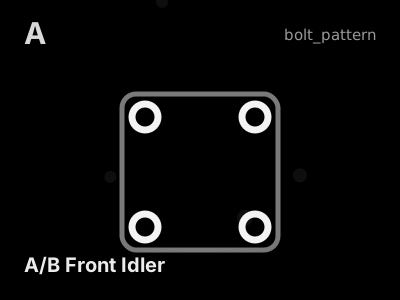 🔷 Hyperobject
A printed front idler for a CoreXY gantry with two stacked belts (a 2.4-class flying gantry). It sits on the front end of a gantry Y extrusion, held by an M5 screw into a T-nut in its top slot, and turns one belt through 180° on a GT2 20-tooth toothed idler outboard of the extrusion, on the belt's level above it; the idler turns on an M5x16 axle under a roof arm. Left (low level, B belt) and right (high level, A belt) versions.
Open in Studio →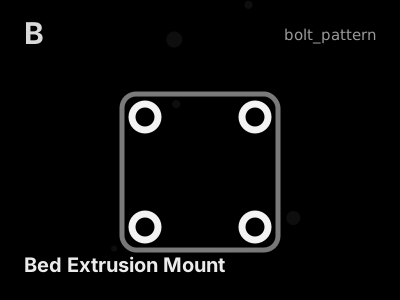 🔷 Hyperobject
A printed T-plate that joins the end of a bed-support 2020 extrusion to the frame's bottom horizontal it butts against, tops flush. The crossbar bolts to the horizontal's top slot with two M5 T-nuts, the stem to the bed extrusion's top slot with one, and a tongue in each slot holds the bed extrusion square and at its butt. Symmetric, so one part serves all four ends of a printer's two bed extrusions.
Open in Studio →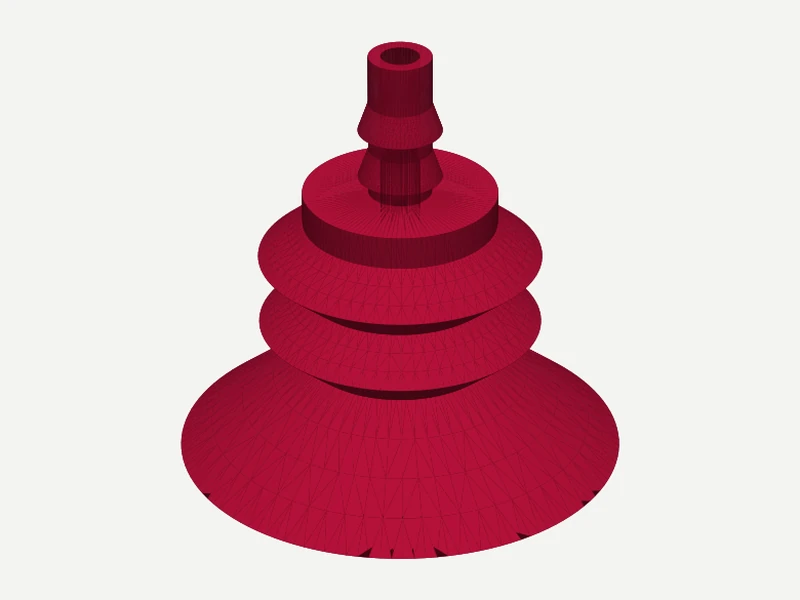 🔷 Hyperobject
The vacuum end-effector primitive: a flared sealing lip over a short convoluted neck. The convolutions let the cup collapse axially when vacuum is drawn, so it lifts a part off a surface without the whole tool moving down, and tolerates a part that is not square to the tool. Cup diameter follows the common 20 / 30 / 40 mm pick-and-place series, and the vacuum port is the shared barb series the rest of the soft-pneumatic family speaks.
Open in Studio →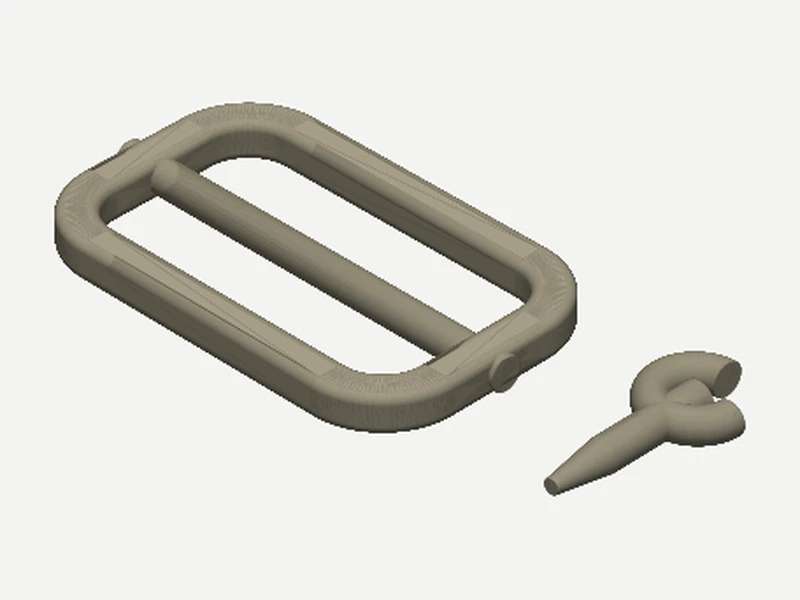 🔷 Hyperobject
A 3D-printed center-bar belt buckle — the rounded frame, its center bar, and the prong that curls around that bar and drops into a punched belt hole. This is the rigid hard good the Fashion Cabinet `belt-buckle` notion places and bridges to here for its geometry, for kilts, belted coats and waistcoat cinches. Sized so a garment's finished strap width drives the finding.
Open in Studio →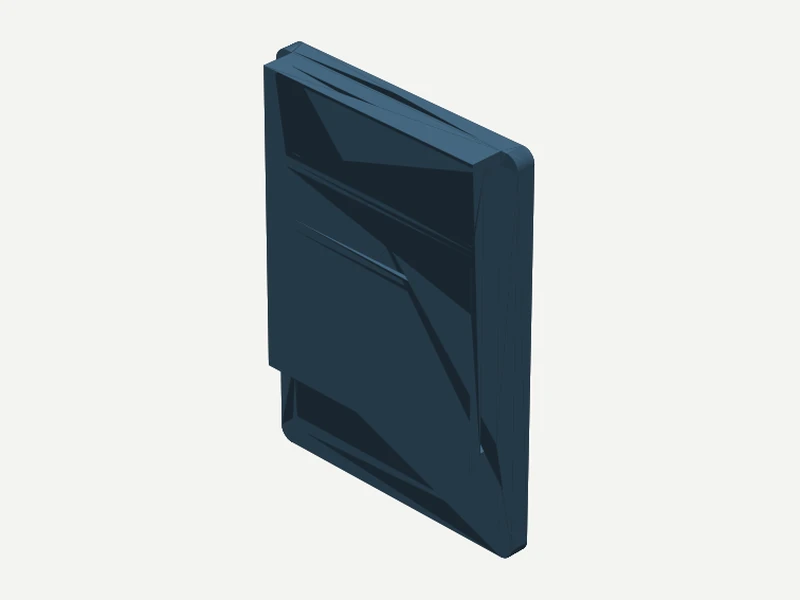 🔷 Hyperobject
Belt-worn carry hardware sized to your belt width. A sprung belt clip that snaps over the belt, a device pocket holster with an integral belt loop, and a bare belt loop to graft onto anything.
Open in Studio →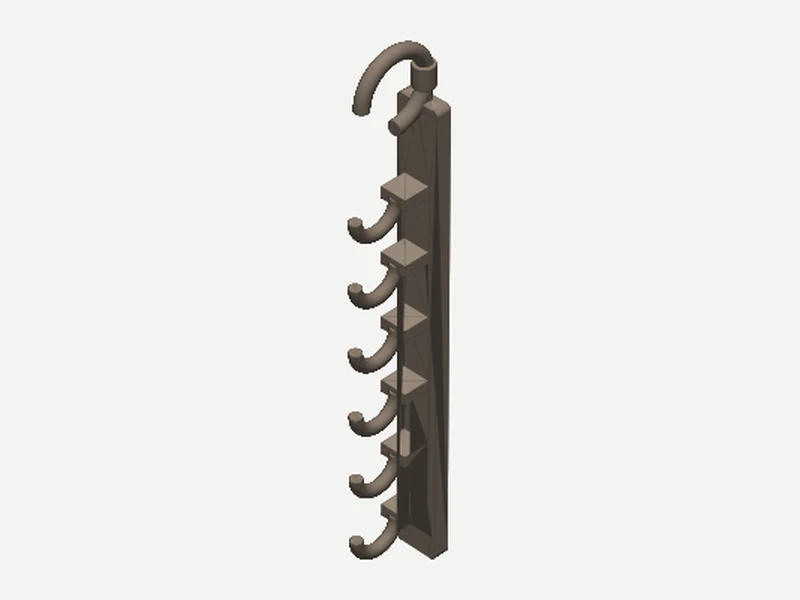 🔷 Hyperobject
A 3D-printed multi-loop belt and accessory rack — a vertical spine carrying a column of open hooks, topped by a rod hook for the closet rail. Each open hook takes one belt folded at its buckle, or a scarf, a tie, or a bag strap, and comes off the front without disturbing its neighbours, which is what an open hook does that a closed loop cannot. The hook throat is sized from the strap width you actually own, across the standard 20 / 25 / 38 / 50 mm webbing widths.
Open in Studio →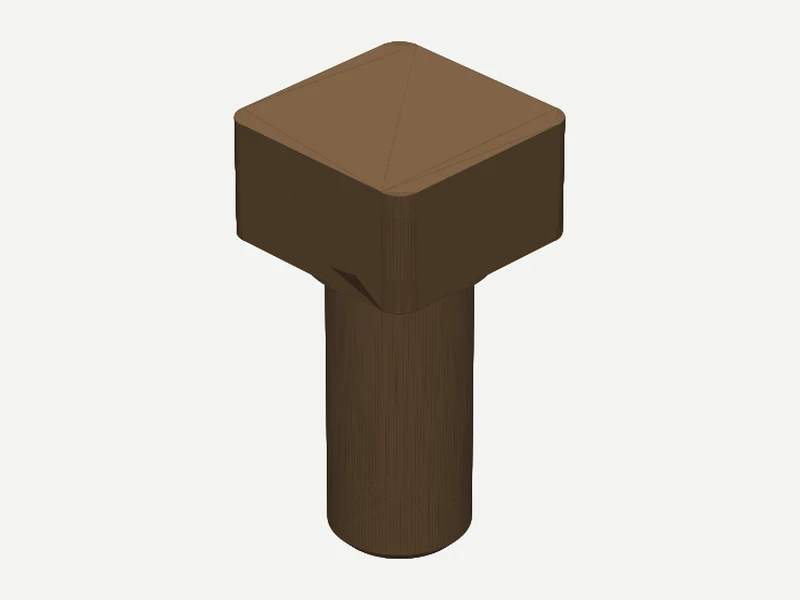 🔷 Hyperobject
Workholding that drops into a workbench dog hole. A round shank sized to the hole (19 mm, 20 mm or 3/4 in) registers the tool; a head above the bench pushes, pins or clamps the work. Choose a round stop dog, a cam hold-down, or a wide planing stop.
Open in Studio →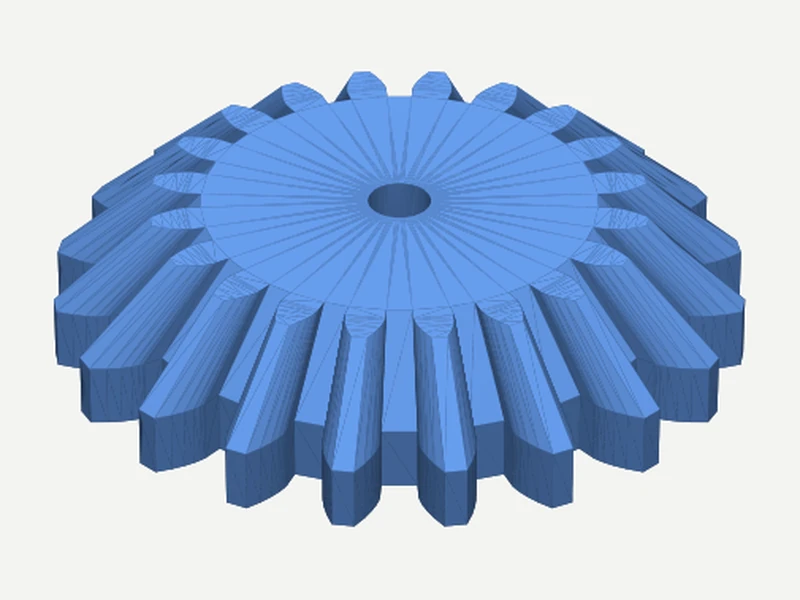 🔷 Hyperobject
A conical bevel gear for right-angle drives. The involute tooth profile is generated at the large (back) end and lofted toward the cone apex so the teeth taper along the pitch cone like a real bevel gear. Equal tooth counts at a 90 deg shaft angle give a miter pair. Uses the Tredgold planar-involute approximation (not spherical octoid flanks) for a printable, watertight bevel.
Open in Studio →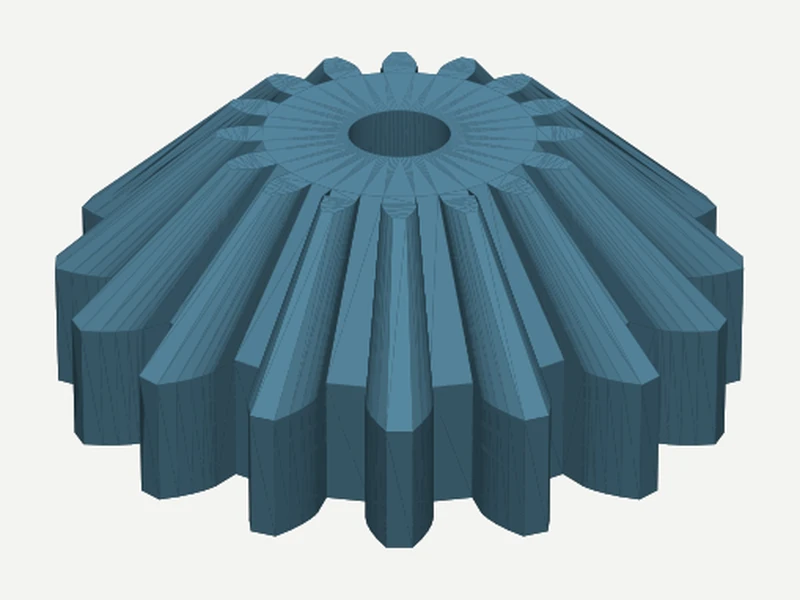 🔷 Hyperobject
A right-angle bevel gear set: a pinion, its mating gear (1:1 miter or a reduction), and a meshing demonstrator that fuses both onto one printable L-bracket. Tooth flanks are generated from the true involute of the base circle at the back cone and lofted toward the apex, so the teeth taper along the pitch cone like a real bevel gear (ISO 23509 geometry). Module, pressure angle, tooth count and shaft angle are the interface — a pinion here meshes any gear sharing them.
Open in Studio →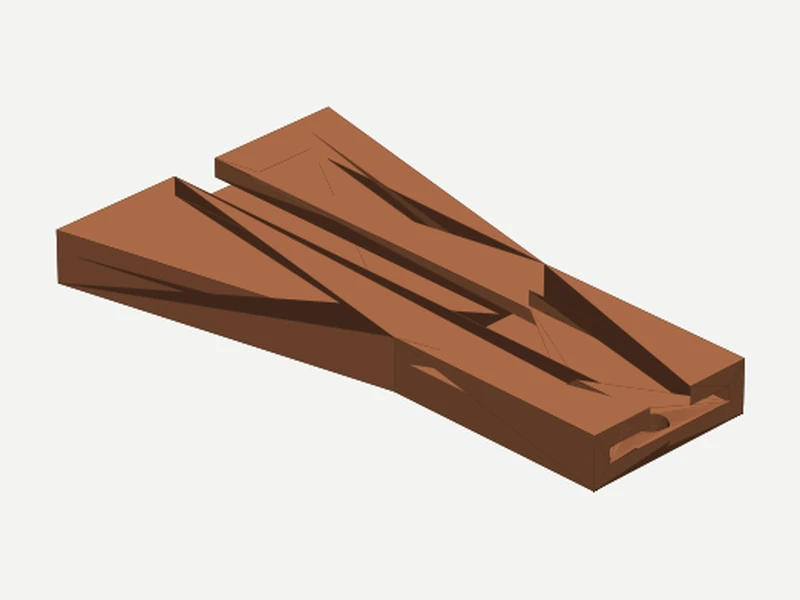 🔷 Hyperobject
A 3D-printed folded-channel bias tape tool: a bias-cut strip feeds in the wide mouth, the tapering channel folds both raw edges to the centre, and single-fold tape comes out the throat under the iron. 18 mm and 25 mm modes, or any finished width you set.
Open in Studio →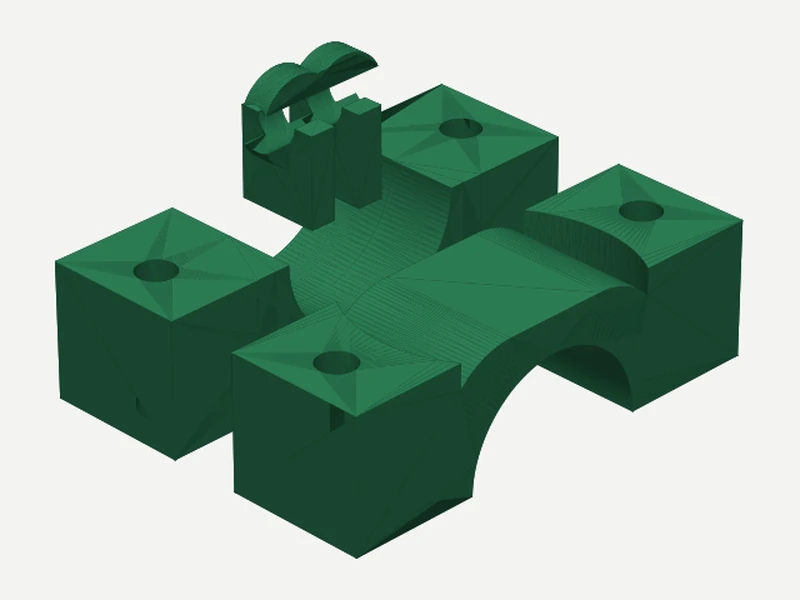 🔷 Hyperobject
A two-piece bolt clamp that grips a bicycle handlebar and carries an accessory on top. The saddle is sized to the standard bar diameters (22.2 / 25.4 / 31.8 mm); the accessory side is a GoPro-style finger clevis, a 1/4-20 camera pad, or a strap/tab bracket. Clamps and cap print as a pair.
Open in Studio →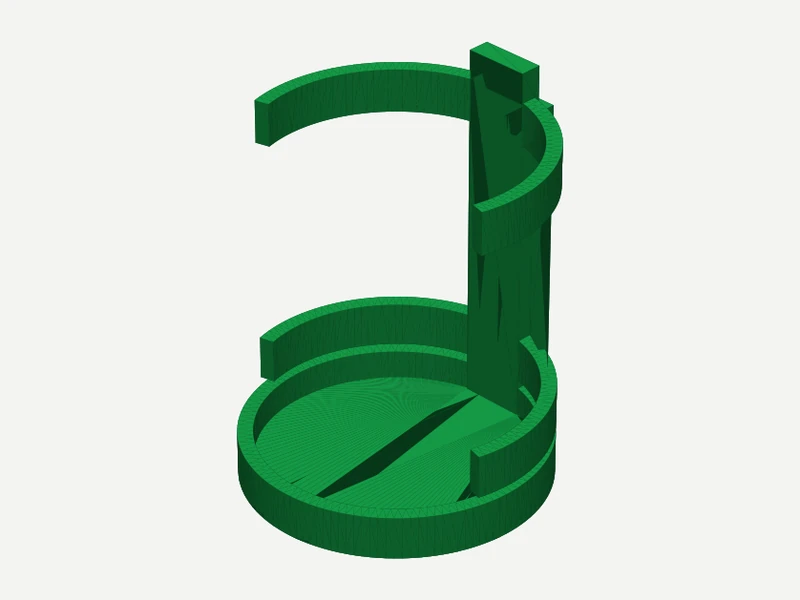 🔷 Hyperobject
A water-bottle cage that bolts to a bicycle frame's standard water-bottle bosses (two M5 bosses at 64 mm spacing). Sized by the bottle diameter so the cradle grips a 73 mm bidon. Side-entry cage, top-entry cage, or a boss-mounted tool/CO2 accessory holder.
Open in Studio →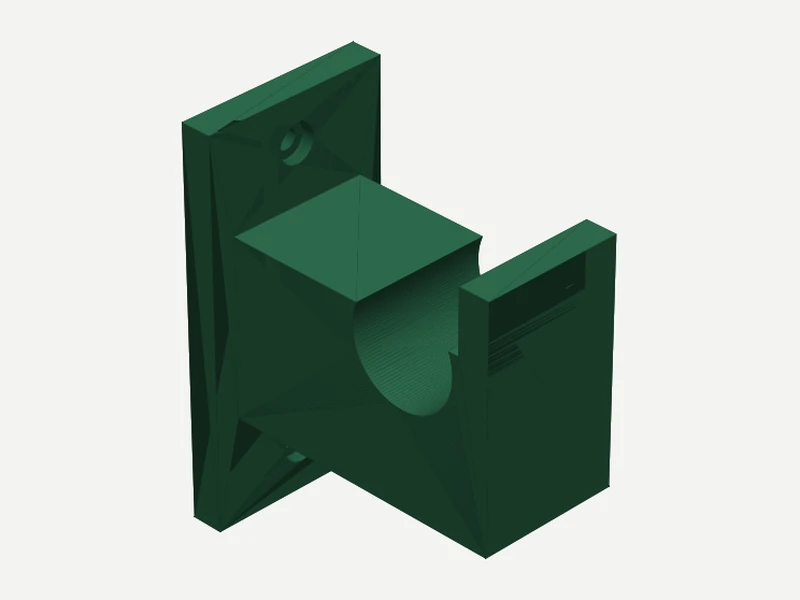 🔷 Hyperobject
Wall-mounted bicycle storage. A load-rated wall plate screws to the studs; an arm projects from it to carry the bike horizontally (by the top tube), vertically (by a wheel), or as a pedal shelf. The tube/wheel contact is a half-round cradle pocket so the frame or rim rests without point loads. The wall plate carries a stud-spaced screw pattern (single stud, or 16 in / 24 in spacing) so the load goes into framing, not drywall.
Open in Studio →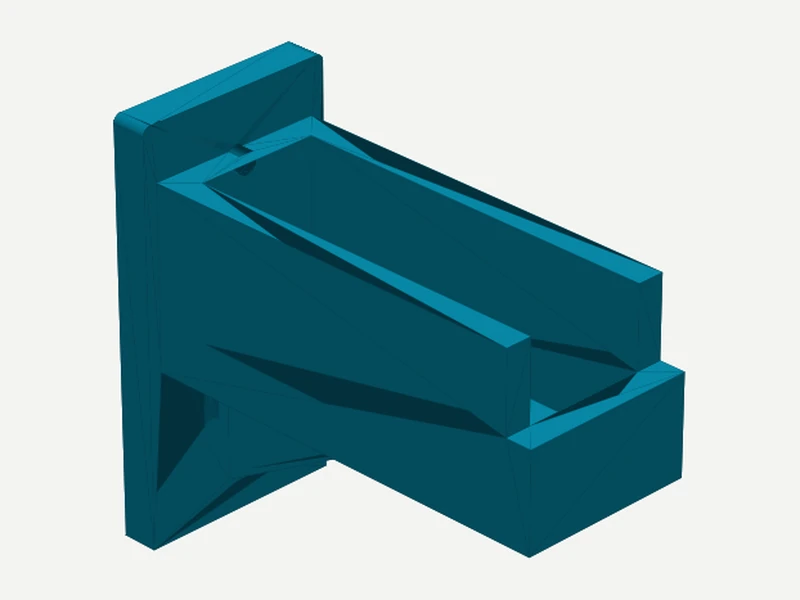 🔷 Hyperobject
A wall bracket that holds a ski, snowboard, or SUP paddle by cradling it in a horizontal slot sized to the board thickness. Print a pair and mount them apart to carry a board flat against the wall. Ski, snowboard, and paddle variants.
Open in Studio →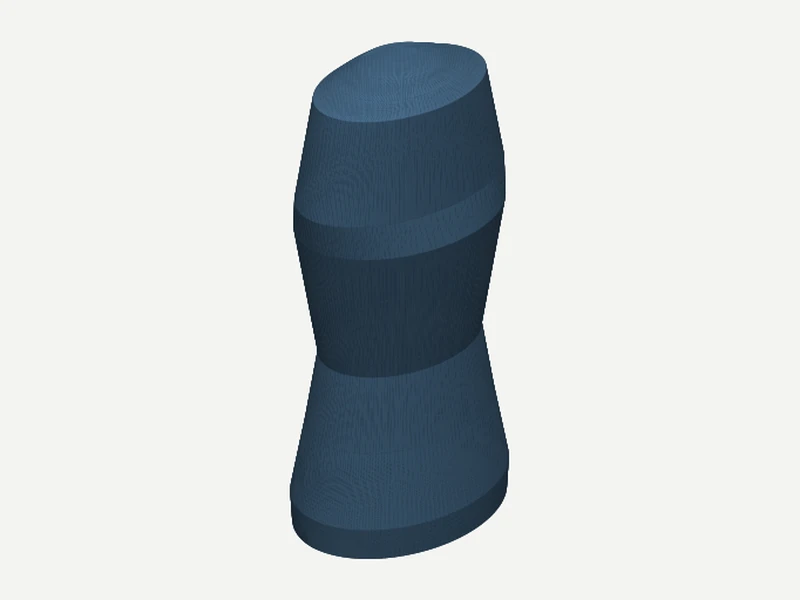 🔷 Hyperobject
A parametric dress form (tailor's torso) — the mannequin the Fashion Cabinet soft-goods commons drapes its patterns onto. Deliberately an abstract form, not a figure: its value is its interfaces — the neck, shoulder, bust, waist, and hip LANDMARK RINGS. Each ring's girth is an ISO-8559 body measurement, so the same numbers that draft a flat pattern in Fashion Cabinet also size this solid, and a garment edge wraps to the ring that carries its measurement. Built as a loft through named elliptical cross-sections whose perimeters equal their girths; verified so every measured ring is dimensionally exact. Modes: a bare torso, a torso on a stand, a bifurcated trouser form with thigh stumps, a full figure from shoulders to floor (shoulder cap, upper-arm stubs, and legs closed at the ankle), and a lower body from waist to ankle.
Open in Studio →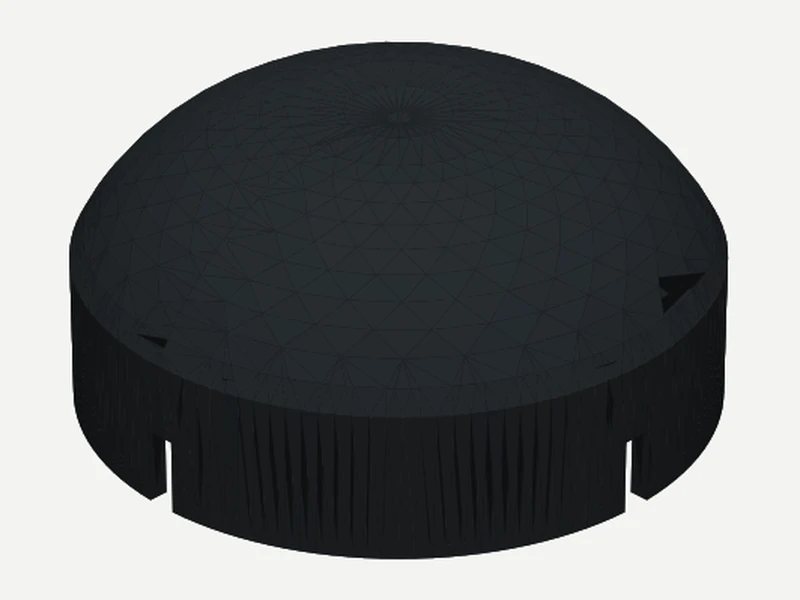 🔷 Hyperobject
Caps that close the open top of a steel pipe bollard. An uncapped bollard fills with rainwater, freezes, rusts from the inside and stains the pavement below — and the factory cap is usually the first part to go missing after a vehicle strike. The skirt bore lands on real NPS schedule 40 steel pipe outside diameters, the same pipe-OD series the published pipe-clip and pipe-fitting families already use. Includes a domed slip-over cap, a flat cap with a chamfered rim, and a flat cap with a recessed band for retroreflective tape.
Open in Studio →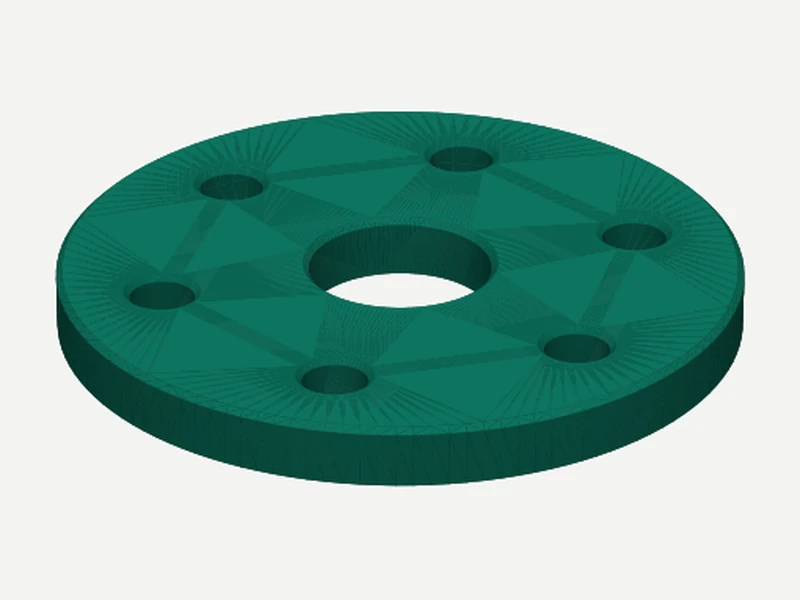 🔷 Hyperobject
A round flange plate with a centered bore and a polar bolt circle, defined as a node graph. Set the plate radius, thickness, bore, bolt-hole size and bolt-circle radius to adapt it to a motor face, pipe flange, turntable or bearing mount; the blank variant omits the bolt holes for marking and drilling by hand.
Open in Studio →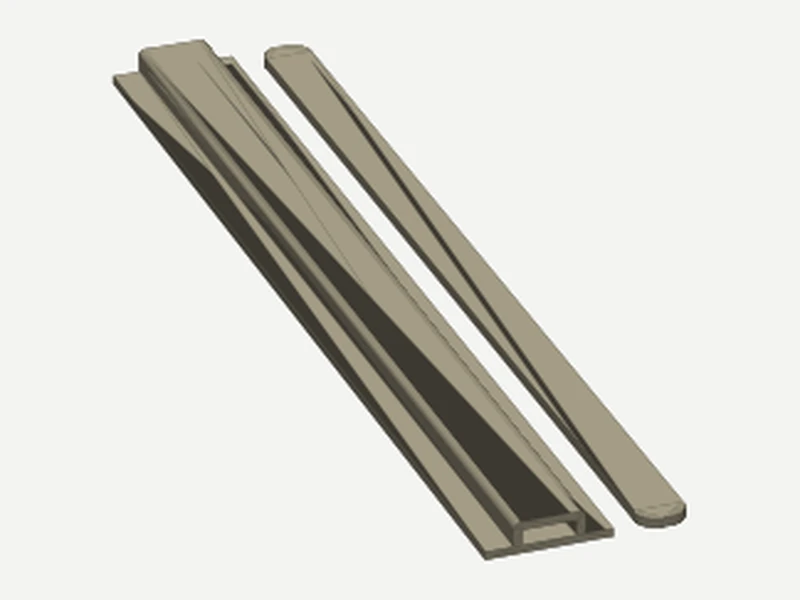 🔷 Hyperobject
The boning of corsetry and structured garments — a flat flexible stay that holds a seam line straight, together with the sew-in channel casing that carries it. This is the rigid hard good the Fashion Cabinet `boning` notion places and bridges to here for its geometry. Printed in a springy filament a thin stay flexes around the body while resisting buckling edge-on, exactly as spiral steel or synthetic whalebone does. Sized by stay length so a garment's finished seam drives the finding.
Open in Studio →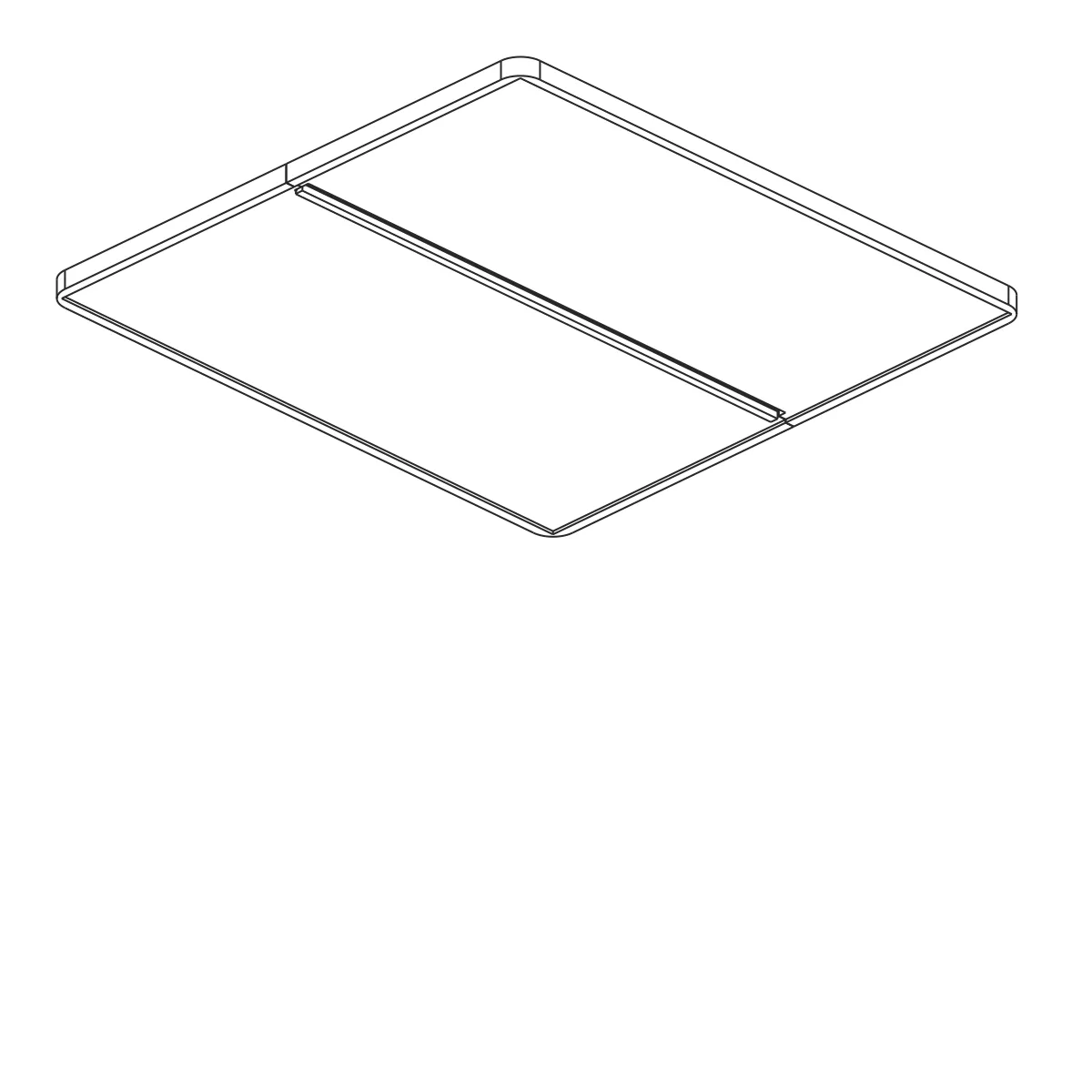 🔷 Hyperobject
The book-fold phone as a parametric archetype: two rigid half-frames on a fold axis along the long edge, one continuous display folded inward across both of them, a cover display outside, a teardrop crease relief, and one continuous fold angle from closed to open. Named devices ride as presets whose every millimetre is a published dimension with a provenance line — the half thickness is the manufacturer's own open depth and the gap is what their closed depth leaves over. No logos, no trade dress. Dual-engine: a CadQuery reference and a node-graph twin.
Open in Studio →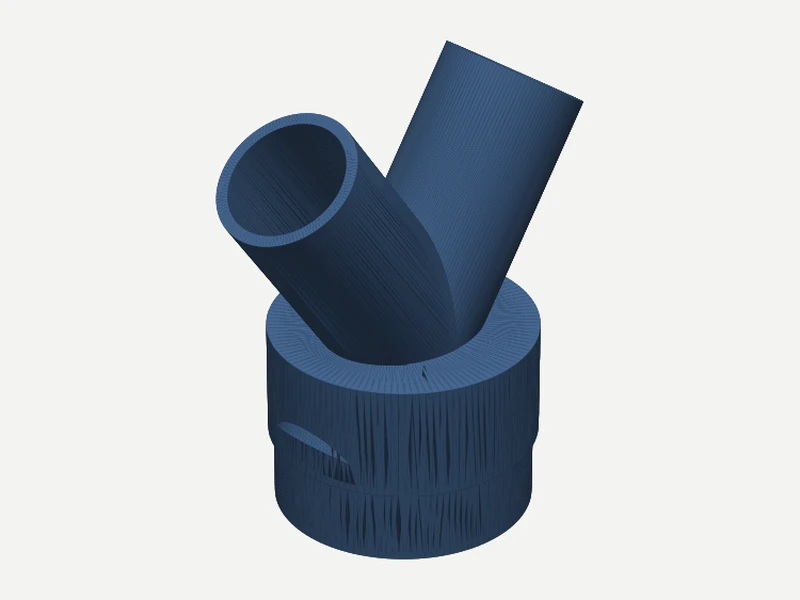 🔷 Hyperobject
Splits airflow from a fan, vent, or hair-dryer into several branches that push warm air down into wet boots and gloves. One inlet leads into a plenum that fans out to N branch tubes; the ends can be plain open tubes, flattened boot-shaped outlets, or the whole thing can carry a wall-mount plate. Dry outdoor gear overnight without a commercial rack.
Open in Studio →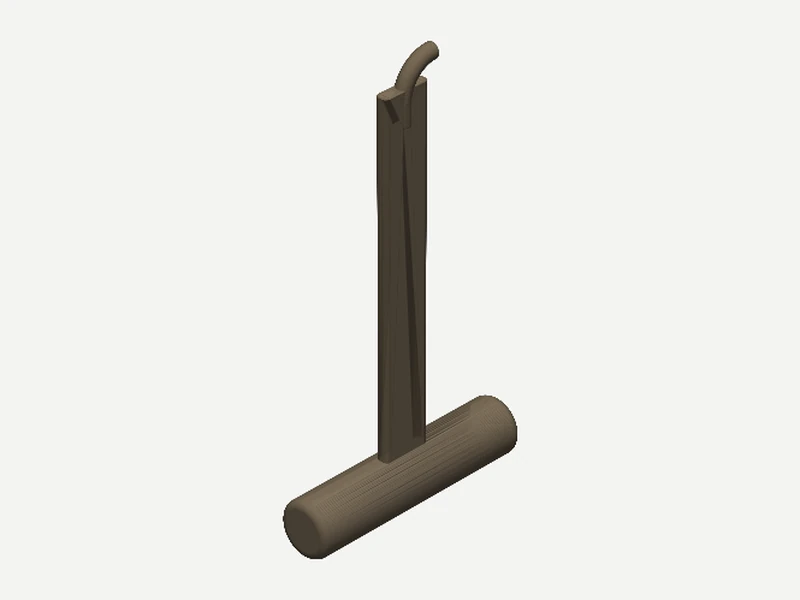 🔷 Hyperobject
A 3D-printed boot-pull — a T-handle on a flat blade ending in a hook that grabs the sewn fabric loop inside a boot shaft, so a tall boot can be hauled on. Riding boots, western boots, work boots and waders carry that loop precisely because they cannot be pulled on by hand; this is the tool that makes the loop usable. The handle is deliberately sunk deep into the blade, because the handle root is where a printed puller actually breaks. One piece.
Open in Studio →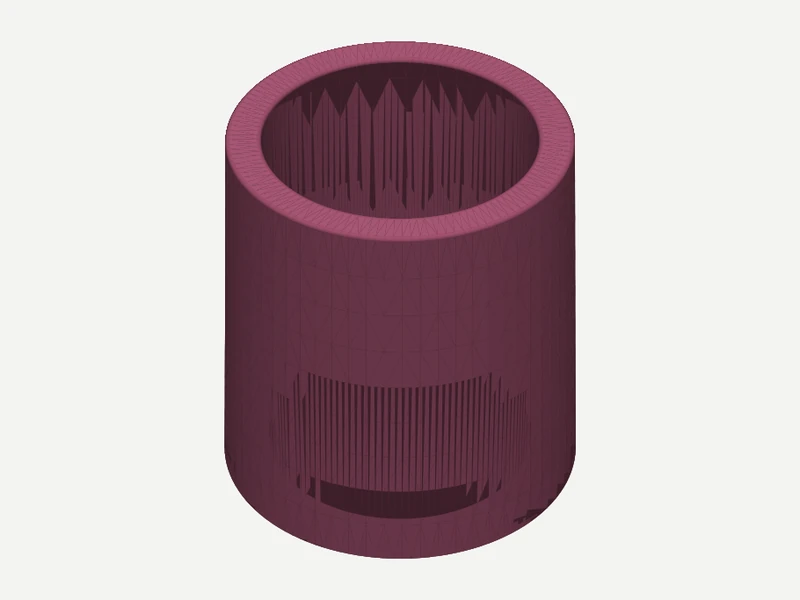 🔷 Hyperobject
A sleeve or adapter that fits a small can or bottle into a larger cup holder, and insulates it. Choose a straight or tapered sleeve, or a stepping adapter whose bore matches the vessel and whose outside matches the holder. Sized by real vessel and holder diameters with a tunable fit clearance.
Open in Studio →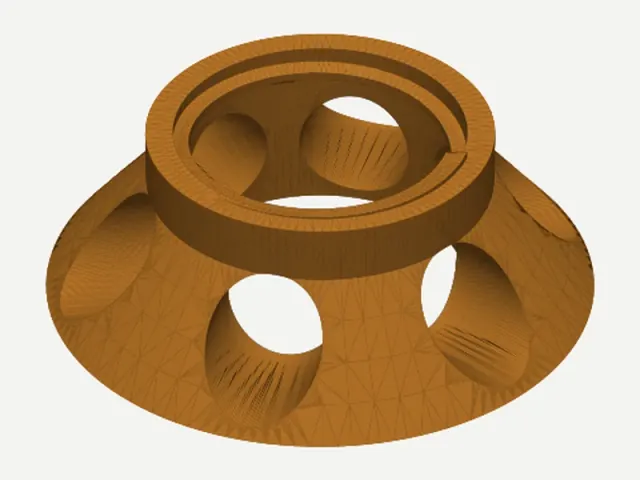 🔷 Hyperobject
Turns a discarded PET soda bottle into a gravity bird / seed feeder. The feeder cap screws onto a standard PCO-1881 bottle neck; seed flows down through ports onto a catch tray with perches. Threaded cap, tray base, or a standalone tube feeder that needs no bottle.
Open in Studio →A single .scad file doesn't define one object — it defines every possible object within its parameter space. We call these Bounded 4D Hyperobjects, and they're building a new kind of open infrastructure.
Traditional 3D files are static — one geometry, frozen at one size. A parametric hyperobject is a computational definition of an entire *family* of objects, bounded by the rules of its code. Change the parameters, and the geometry adapts — instantly.
One fixed geometry. One size. Download and hope it fits.
Infinite geometries. Your dimensions. Configured to your reality.
From your desk drawer to disaster relief — parametric hyperobjects standardize the interfaces that let communities manufacture what they need.
Organization, infrastructure, and self-sufficiency for the domestic sphere.
Gridfinity (42mm modular storage) · Parametric Connectors (PVC/bamboo shelters) · Faircap Water Filters (PCO 1881 thread)
Bridge manufacturing and on-demand tooling for the factory floor.
DIN Rail Clips (TS35/TS15 profile) · 80/20 T-Slot Accessories · Parametric Jigs & Fixtures
Accessible healthcare through open-source diagnostic and prosthetic devices.
Prosthetic Sockets (limb-scan parametric) · Glia Stethoscope · Open Otoscope
Right to Repair and circular economy through parametric spare parts.
Universal Gear Generator (module/pressure/teeth) · Parametric Knobs (D-shaft) · VESA Mounts
CDG is the standardized geometry that ensures interoperability across the commons. Each CDG defines an immutable interface — the mathematical truth that lets hyperobjects from different creators work together.
Borrowed from aerospace lofting, CDG provides the geometric 'ground truth' that ensures a filter fits any bottle, a clip snaps onto any rail, and a socket connects to any prosthetic. Standardize the interface, and the community builds the rest.
Universal modular storage grid. 42mm base module, 7mm height unit, standardized lip profile.
Microscope slide dimensions — 76×26×1mm. Standard across histology, cytology, and pathology worldwide.
Standard PET bottle neck thread — 26.7mm OD, 3.18mm pitch. Turns plastic waste into water infrastructure.
Industrial automation rail — 35mm wide, 7.5mm hat profile. The backbone of every electrical panel.
6" jaw width, 5/16-18 bolts at 4.5" spacing. The universal interface for CNC workholding.
Otoscope cone — 4.25mm OD, 3° taper. Matches disposable medical consumables globally.
Defined by module, pressure angle, and tooth count. The universal language of mechanical power transmission.
Stop designing products. Start designing interfaces. A perfect Gridfinity base is more valuable than 1,000 different cup holders.
module gridfinity_bin(
  width    = 3,
  depth    = 2,
  height   = 6,
  dividers = 2,
  lip      = true,
  magnet   = true
) {
  // 200+ lines of geometry...
}Stop printing someone else's dimensions. Customize everything, know the cost, export and print.
Sliders, toggles, color pickers. Change any dimension, see it in real-time 3D.
Time, filament and cost estimates before you waste a gram — approximations, not slicer-exact.
STL for the slicer, STEP for real CAD. 503 cartridges export B-Rep solids you can open in Fusion, SolidWorks or FreeCAD.
Step-by-step 3D instructions. Bill of materials included.
No install. No account. Open a link, start customizing.
Your designs deserve an audience beyond coders. Turn OpenSCAD or CadQuery models into shareable configurators.
Drop in .scad or CadQuery Python. Yantra4D reads the parameters and generates a configurator.
Tiny URL for any configuration. Your makerspace, your subreddit, your family.
Params, presets, assembly steps, BOM, modes — one JSON manifest.
Five projects free with an account, unlimited on Pro. Each gets its own URL.
AGPLv3. Self-host, fork, contribute. Your configurators are yours.
Pick a project from the gallery or follow a shared link.
Adjust dimensions with sliders and toggles. See changes in real-time 3D.
Download your STL and send it to your slicer. Done.
Drop your OpenSCAD source files into Yantra4D.
Edit the manifest — params, modes, presets, assembly steps.
Get a link. Anyone can customize and export your design.
Self-host, contribute, build on top — own your configurators.
Platform AGPLv3, designs CERN-OHL-W. Four kernels render the commons — OpenSCAD, CadQuery B-Rep, an implicit SDF engine for lattices, and a new node-graph engine — behind React, Three.js, Flask and WebAssembly.
The commons is free forever. Paid tiers fund the servers that render, verify, and manufacture it.
Need a branded studio with a private catalog for your team or clients? White-label licensing is available fromInnovaciones MADFAM
No account required. No install. Just open.